




How Do Visual Discrimination Skills Develop?
Developing visual discrimination skills begins with naturally occurring situations and opportunities that happen every day!
When I walk around the neighborhood with my young grandchildren, especially the 2-5-year-olds, it takes a long time! I am sure that you have noticed that children stop and investigate every leaf, stone, flower, twig, or strange article on the sidewalk. They touch, feel, smell, and sometimes try to taste items of interest. We often discuss what they see and talk about items they inspect.
Sometimes, they make “collections.” The children are “taking in” their environment. They try to make sense of it, organize and interpret the information that has been explored, and give it meaning.
Visual Discrimination is a General Title
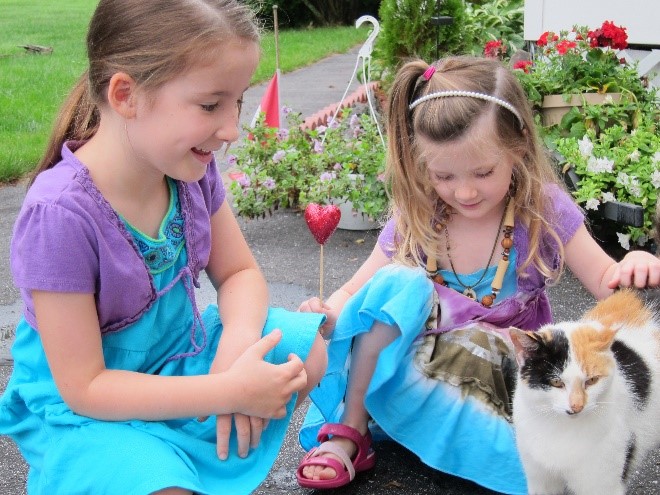
- As young children encounter animals and insects, they examine the creatures’ features and learn to identify them as cats, dogs, ants, ducks, and so on. They use visual discrimination skills!
- When you and your child are outside, take the opportunity to explore the natural world! Observe the size, shape, color, texture, and other characteristics of grass, trees, insects, plants, rocks, and other natural elements. Use words that describe the object. Say, “Look at the big tree.” “Feel the wet grass.” “Touch the soft flower.”
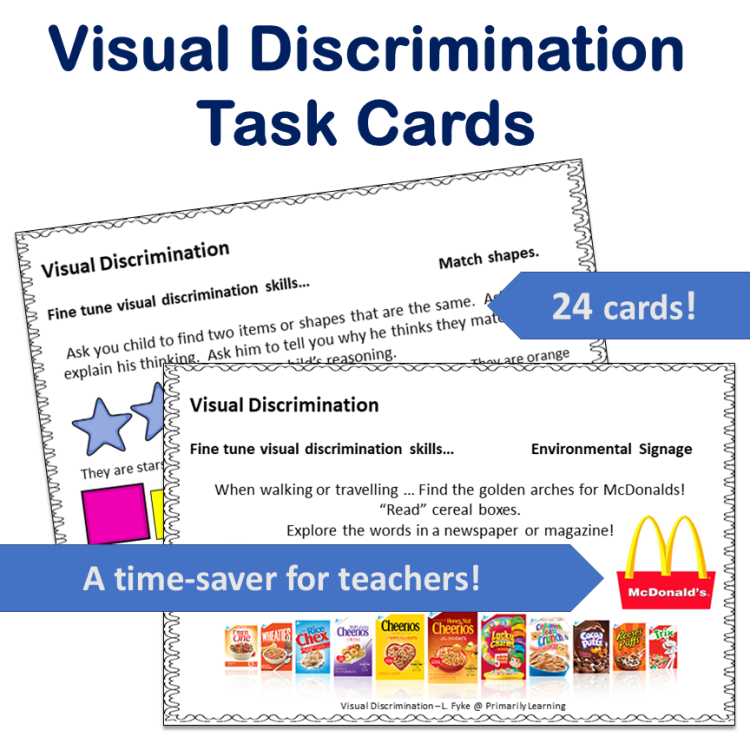
- Ask your child to find two items or shapes that are the same. Question your child, “Why do you think they are the same (match)?” Listen to the child’s reasoning. Talk about it.
- Sort toys together! Ask your child to help you sort socks in the laundry. Suggest that your child sort drawing tools (e.g., crayons, pencils, markers, chalk). Sort the Lego toys and the building blocks! Children visually process information from the time they begin to see shapes and lines.
Why is Visual Discrimination Important for Reading?
Visual Discrimination is essential because if a child is unable to distinguish the letter “b” from the letter “p,” they will incorrectly read the word “bat” as”pat.”
Similarly to the trained eye, it seems easy to identify letters like “h, n, r,” but to a child learning to read and write, these letters may all look “about the same.” These skills need to be taught and practiced.
Some readers require extra practice to read, sequence, and remember the letters that make up words (blending). They may also require additional instruction to recall the formation of letters (graphemes) when spelling a word (segmenting) or writing a story. Isn’t it amazing how much a young child learns?
Visual Processing and Auditory Processing are foundational skills that your child will build upon when reading and writing. Reading programs like JOLLY PHONICS build on prior knowledge outlined in an EARLY LITERACY Overview for Parents and Teachers.
Visual Discrimination:
Visual Discrimination activities, like sorting by size, shape, and color, strengthen a child’s observational skills. These tasks provide opportunities for the brain to interpret and process visual information.
Signs a Child May Need More Visual Discrimination Practice
A child may benefit from extra visual discrimination activities if they often:
- confuse similar letters such as b/d, p/q, or m/n
- reverse letters or numbers
- mix up words with the same letters in a different order
- have difficulty matching letters or shapes
- skip over small details in pictures or print
- struggle to copy accurately
- become frustrated with early reading or writing tasks
These challenges are common in the early years. Gentle, playful practice can make a big difference.
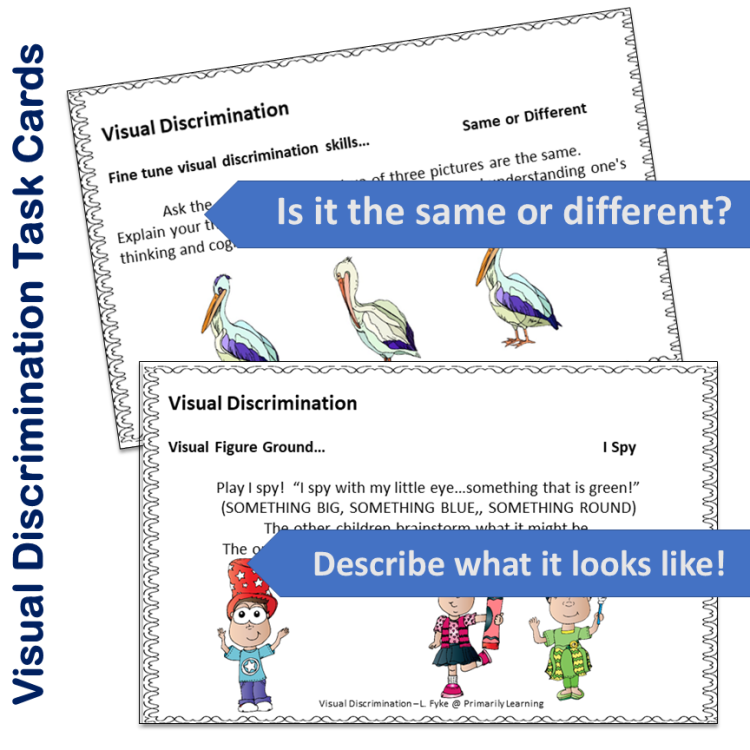
Play “Same and Different” – Show children two pictures, letters, or shapes. Ask: “Are they the same or different?”
“How do you know?” “What part changed?” This encourages children to look closely and explain their thinking.
Visual Discrimination “is a general term for visual skills that require the ability to detect specific features of an object, to recognize it, to match, or duplicate it, and to categorize it.” (The FREE Dictionary by Farlex)
Visual Discrimination: Figure-Ground
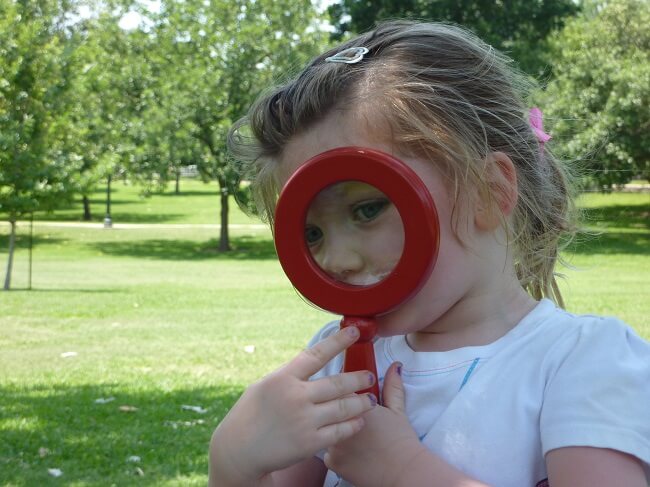
A figure-ground activity, such as “Finding Waldo,” challenges the brain to search for a hidden picture among many visual images. Play games like “I Spy.” (e.g., I spy with my little eye, something that is round.” Ask the children to brainstorm things that they see that are round.
If the item is not guessed, add a second clue. (e.g., I spy with my little eye, something that is round and has numbers on it.” Continue adding clues until a child correctly identifies the object.
Go on a scavenger hunt! These activities help your child develop the ability to identify and name shapes and objects within visually complex background images.

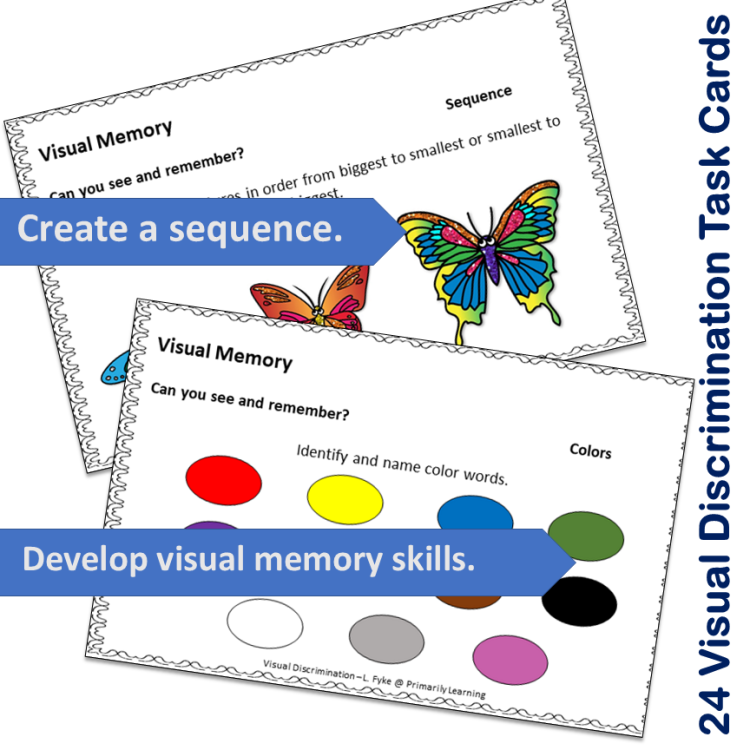
Visual Discrimination: Visual Memory
You will know that visual memory skills are developing when the child recognizes that a chair is a chair, regardless of how it is flipped or turned.
Try Visual Memory Games – Show a simple pattern, picture, or group of letters for a few seconds. Cover it. Then ask the child to recreate or identify it. Start small. Keep it fun. Celebrate careful looking.
Identifying and naming colors and shapes helps children develop visual discrimination skills, e.g., visual memory. Consider how important this skill is when you learn to read.
Symbols for letters and numbers may look similar, but they have different meanings as you turn or flip them!
Compare Tricky Letter Pairs – Use letter pairs such as: b / d, p / q, m / n, u / n. Have children trace the letters, say the sound, and describe what they see. For example: “The stick is on this side.” “The circle comes after the stick.” “This letter faces this way.”
Use Word Pairs – Once children are ready, compare short words such as: was / saw, on / no, tap / pat. Ask children to point to the first letter, last letter, and middle letter. This helps them see that word order matters.
A reader needs to connect letters and sounds and then remember the sequence of sounds to blend the letters to read a word. (i.e./m/-/o/-/n/-/s/-/t/-/er/ = monster). He also needs to connect the sound to the letter when spelling words (i.e., chop = /ch/-/o/-/p/) and remember the letters (and word shapes) that make up sight words!
Check out these Same and Different Matching Games!

Visual Discrimination: Spatial Relations
While playing with your child, the concept of spatial relations develops. Just watch your little one having fun tracking mazes, copying Lego patterns, following directions (e.g., Put your hands on your head. Crawl under a chair. Put your name on top of the page.), or reading an analog clock.
Other activities that help develop spatial relations include leapfrog, hopscotch, setting the table, playing board games, and engaging in construction games. (e.g., building with Lego, Lincoln Logs, making forts)
Visual Discrimination: Visual Closure
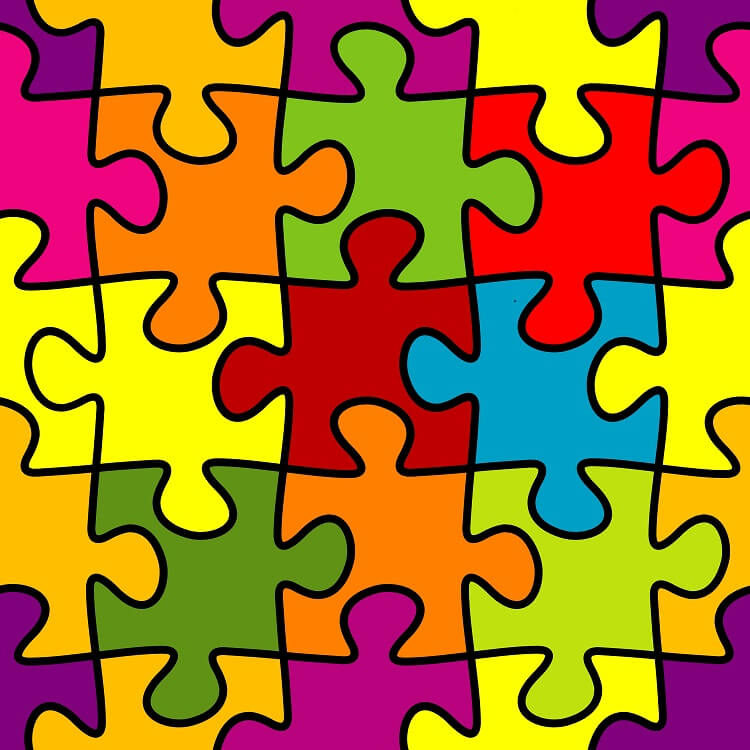
As you and your child work on simple to more complex puzzles, match pictures to the shadow or outline, or complete a letter (or form) to match the one beside it, you are developing visual closure skills.
You don’t have to process every letter individually to recognize the word by sight quickly when you read. Visual Closure is the ability to identify a letter, number, or object without seeing all of the word or item. Some great early storybooks play with this! (i.e., “Dear Zoo” by Rod Campbell)
Visual Discrimination: Visual Sequencing
Visual Sequencing skills develop as you play with colored blocks. Place the blocks in a pattern or sequence. (e.g., using COLOR: red, blue; red, blue; or using SHAPES: square, triangle, triangle, circle; square, triangle, triangle, circle… etc.) Ask your child to complete the pattern or make a row just like yours… matching patterns.
Challenge them: Show your child how you complete two rows… and then change one (or two) objects in the second row… Ask your child to “Find the blocks that do not belong. Can you fix the pattern so that it matches the top row?”
Draw 3-6 simple pictures showing how to sequence building a snowman, make a sandwich, or get dressed. Ask your child to sequence the pictures correctly and tell what is happening.
According to the Advanced Vision Therapy Center:
“Without accurate visual perceptual processing, a student would have difficulty learning to read, give or follow directions, copy from the whiteboard, visualize objects or past experiences, have good eye-hand coordination, integrate visual information with other senses to do things like ride a bike, play catch, shoot baskets when playing basketball, or hear a sound and visualize where it’s coming from. (like the siren on a police car).“
- Have fun playing games and visually identifying and naming objects as you come across them! Sort and classify. Look at shapes, outlines, colors, and sizes. Talk about the likeness and differences. Follow directions for crafts. Create structures. Enjoy books. Wow! Learning is fun!
- Once again, remember to provide numerous and varied learning opportunities, as children do not all learn at the same pace or in the same way. Each child is different, and children develop at varying rates. Some children will quickly grasp and enjoy an activity, while others need repeated learning opportunities. To learn more, check out Visual Processing Explained.
Have fun!!
Laurie
Check this out! Download 👇
2 Responses
Good job on this article! I really like how you presented your facts and how you made it interesting and easy to understand. Thank you.ibrahim murat gündüz
You are most welcome, Ibrahim!